Emotional Investing: The conversation before the decision
When a client phones after a market fall and says, “I want out”, our instinct may be to reach for a performance chart. Yet, the first task is to understand what has changed: the market, the client’s circumstances, or their sense of safety.
Emotion is information. It shows how a client is experiencing risk, but it is not, on its own, an instruction to act. Good advice begins by separating a valid concern from the urge to restore control.
Recognising when emotion is taking over
The signs often appear before the switch arrives. A ten-year plan is judged by a ten-day return. Portfolio values are checked daily, and a diversified strategy is compared with the latest winning share or sector. Language becomes absolute: “Everyone is selling”, “This time is different” or “I cannot afford to wait”.
Research helps explain this response. Kahneman and Tversky’s prospect theory showed that losses carry greater psychological weight than equivalent gains. Barber and Odean’s study of 66 465 brokerage households found that the heaviest traders significantly underperformed the market. Investment activity should not be mistaken for investment progress.
The cost of decisions made for comfort
Emotional decisions extend beyond selling after a fall. Clients may chase recent performance, concentrate on risk, stop contributions when assets are cheaper or hold cash while waiting for ‘certainty’. Poor timing, costs, tax consequences and missed growth can turn temporary discomfort into permanent loss. For a retirement fund member, one defensive switch may affect income decades later.
Momentum Investments’ Sci-Fi Report 2025, published in January 2026, provides a useful South African example. It defines ‘behaviour tax’ as the value lost when the funds investors switch into subsequently underperform those they leave. The report measured behaviour tax of 1.27% for discretionary investments and 1.28% for retirement-income portfolios. The Anxious archetype incurred 4.69%, the highest of the groups studied.
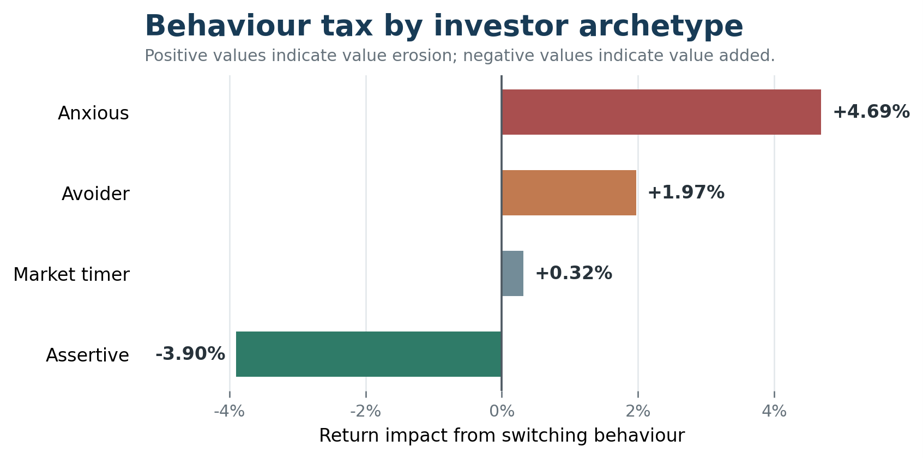 Figure 1 - behaviour tax by investor archetype (%)
Source: Momentum Investments, Sci-Fi Report 2025, published January 2026.
The Assertive result reflects a generally rising market and does not show that frequent switching consistently adds value.
Not every concern is a bias
Behavioural finance should never become a reason to dismiss a client’s question. Anxiety may reveal an inadequate emergency reserve, changed liquidity needs, a shorter investment horizon or more risk than the client understood. Concerns about concentration, fees, valuations or a changed investment case may be valid. Sometimes the behaviour needs managing; sometimes the plan needs changing.
A better conversation before action
Start with curiosity: “Tell me what worries you most.” Let the client finish and reflect the concern accurately. Separate the event, the emotion and the proposed decision. Ask what has changed since the plan was agreed. Then bring in the evidence. Translate percentages into Rands and revisit the goal, time horizon, cash needs, tax position and capacity for loss. Explain which facts would justify a portfolio change and which are market noise. “Stay calm” is not sufficient advice; context is.
If there is no urgent liquidity or safety concern, agree to pause before implementing a switch. Compare the consequences of acting and not acting, then schedule a follow-up conversation. The decision remains the client’s, but it should be made with perspective, not pressure.
Our role is not to make clients emotionless investors. It is to ensure that emotion is heard without allowing it to make the decision alone. Caring for outcomes means protecting both the portfolio and the person who must live with it, especially when a member’s long-term financial security is at stake.

Ivan Pretorius
Executive Partner | GIB Private Clients
We grow your wealth by combining active and passive management in an innovative matrix. GIB has been able to continues to deliver while reducing costs and increasing efficiency. Grow you wealth today
Learn more